
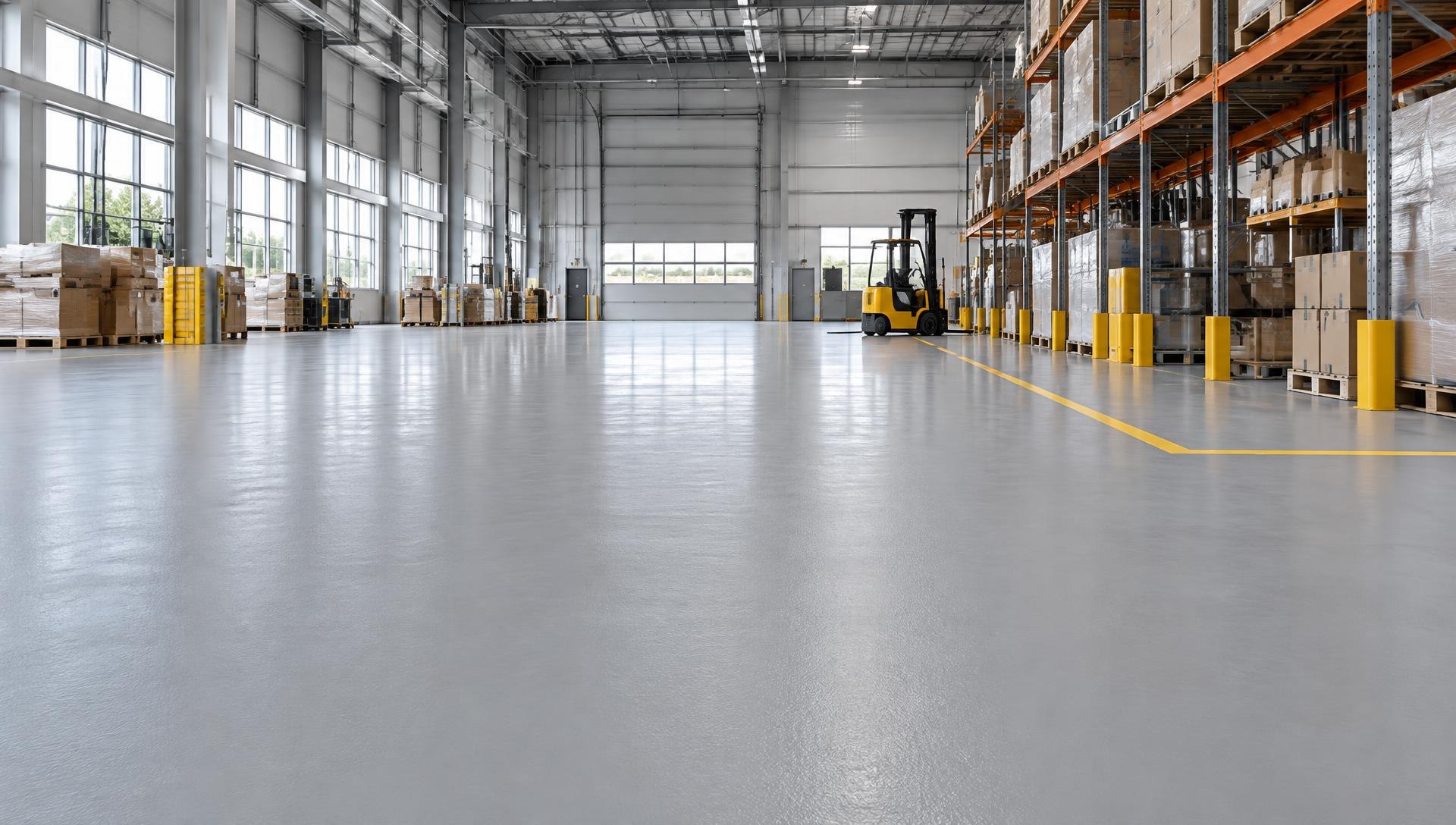
Industrial Floor Coatings
High-build systems for floors that work as hard as the building does.
Overview
Where industrial floor coatings belongs
Warehouses, production areas, and service spaces ask more of a floor than almost any other surface in a building. Forklift traffic, dragged pallets, chemical exposure, and tight shutdown windows all shape which system belongs on the slab.
Charlec Coating Systems installs high-build epoxy, textured aggregate systems, and suitable fast-curing MMA and polyaspartic options. We assess the space, prepare the concrete mechanically, and install the system specified for the conditions — coordinated with your operations so downtime stays predictable.
Typical applications
- Warehouses and distribution centres
- Production and manufacturing areas
- Maintenance facilities and workshops
- Service corridors and back-of-house spaces
- Utility and mechanical rooms
Performance
What we weigh before recommending
- Traffic type and loading — forklift, pallet jack, or pedestrian
- Chemical exposure and cleaning regimes
- Moisture condition of the slab
- Existing slab condition and previous coatings
- Slip resistance appropriate to the work performed
- Available shutdown or phasing windows
System options
High-build epoxy
A durable, seamless coating for general industrial duty, available in a range of colours with optional aggregate texture.
Textured aggregate systems
Broadcast aggregate within the coating build provides added traction and wear resistance in demanding aisles and work zones.
Fast-curing MMA / polyaspartic options
Where the schedule allows only short closures, suitable fast-curing chemistries can reduce return-to-service time. We confirm compatibility with the slab and environment before proposing them.
Installation
How the work runs
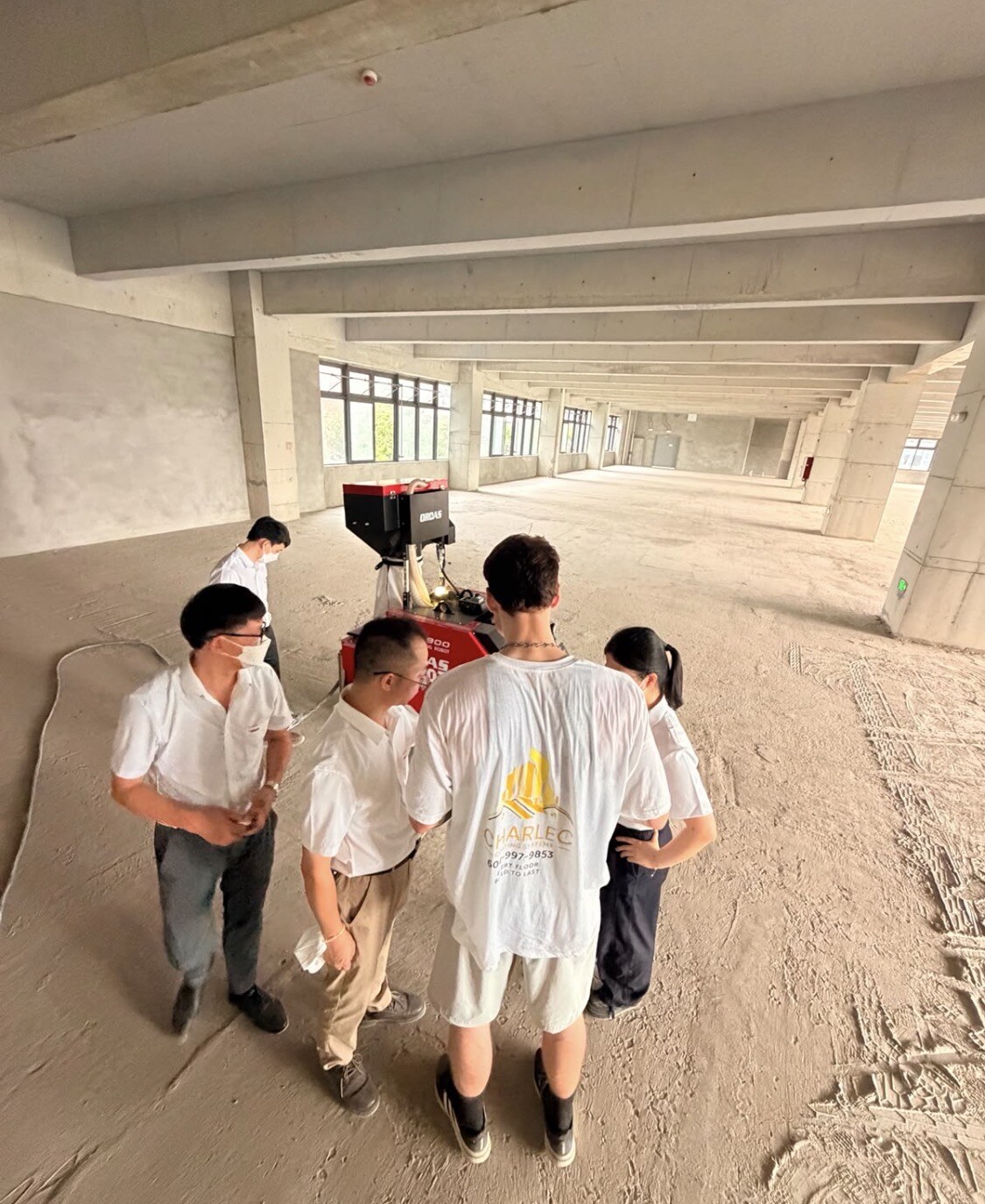
We review the slab, site conditions, traffic, and operating requirements, and confirm the specified system.
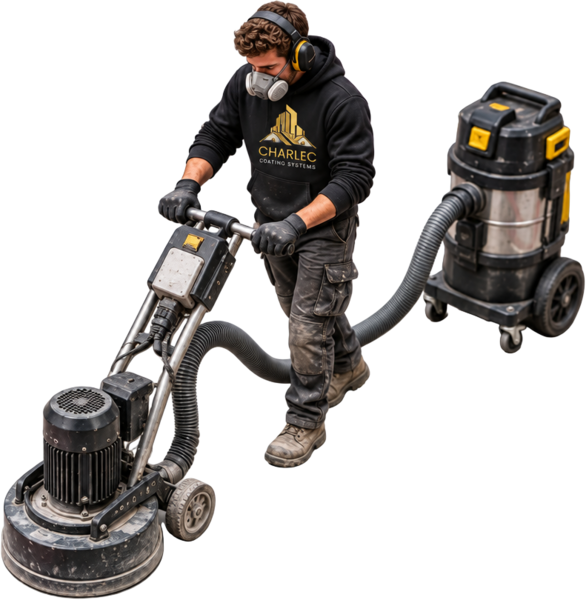
Mechanical preparation — grinding or shot blasting — establishes the profile the coating needs to bond.
Cracks, joints, spalls, and local defects are treated before coating, not after.
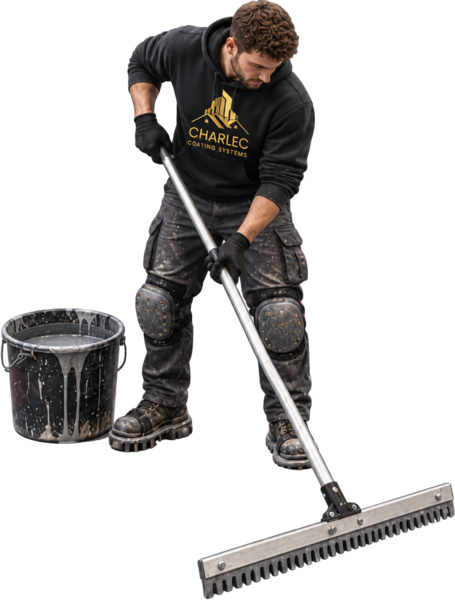
Primer, body coats, and any aggregate broadcast are installed per the manufacturer's requirements.
Topcoat, demarcation lines where specified, and a documented walkthrough before the space returns to service.
Preparation & detailing
- Diamond grinding or shot blasting matched to the specified system
- Crack treatment and semi-rigid joint filling where appropriate
- Moisture assessment, with moisture-vapour mitigation where required
Maintenance & return to service
- Routine dust mopping and periodic scrubbing keep the surface performing
- Prompt cleanup of chemical spills preserves the finish
- High-wear lanes can be recoated without replacing the whole floor
Beneath the surface
Performance.
Layer by layer.
High Build Epoxy System: build-up layers from the prepared slab up. Final layers and thicknesses follow the specification.
Optional urethane / polyaspartic topcoat
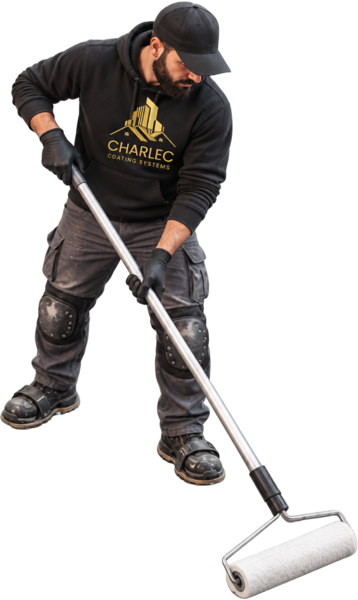
Back-rolling the protective topcoat.

Maintenance guide
Keep it looking new.
Industrial coatings are built for heavy use; routine cleaning keeps safety lines crisp and traction working.
| Task | How often |
|---|---|
| Sweep or dust mop to lift grit and debris | Daily |
| Damp mop or auto-scrub with a pH-neutral cleaner and a soft pad | Daily to weekly, by traffic |
| Clean up spills, oils and chemicals | Right away |
| Walk the floor and check high-wear zones and edges | Every 6–12 months |
| Refresh the topcoat in traffic lanes if the sheen wears | As needed |
| Repaint worn safety lines or aisle markings | As needed |
Do
- Use walk-off mats at entrances to keep grit off the floor
- Rinse with clean water after cleaning so no residue builds up
- Put felt or rubber pads under furniture and equipment feet
- Use a stiff brush on textured anti-slip areas to lift dirt from the profile
Avoid
- Use harsh acids, citrus or vinegar cleaners — they dull the sheen
- Scrub with steel wool or aggressive black pads
- Drag sharp or heavy items across the surface
Related industries
- Warehouses & Distribution
- Manufacturing & Production
- Automotive & Service Facilities
- Institutional & Public Facilities
Questions
Industrial Floor Coatings FAQs
Related systems
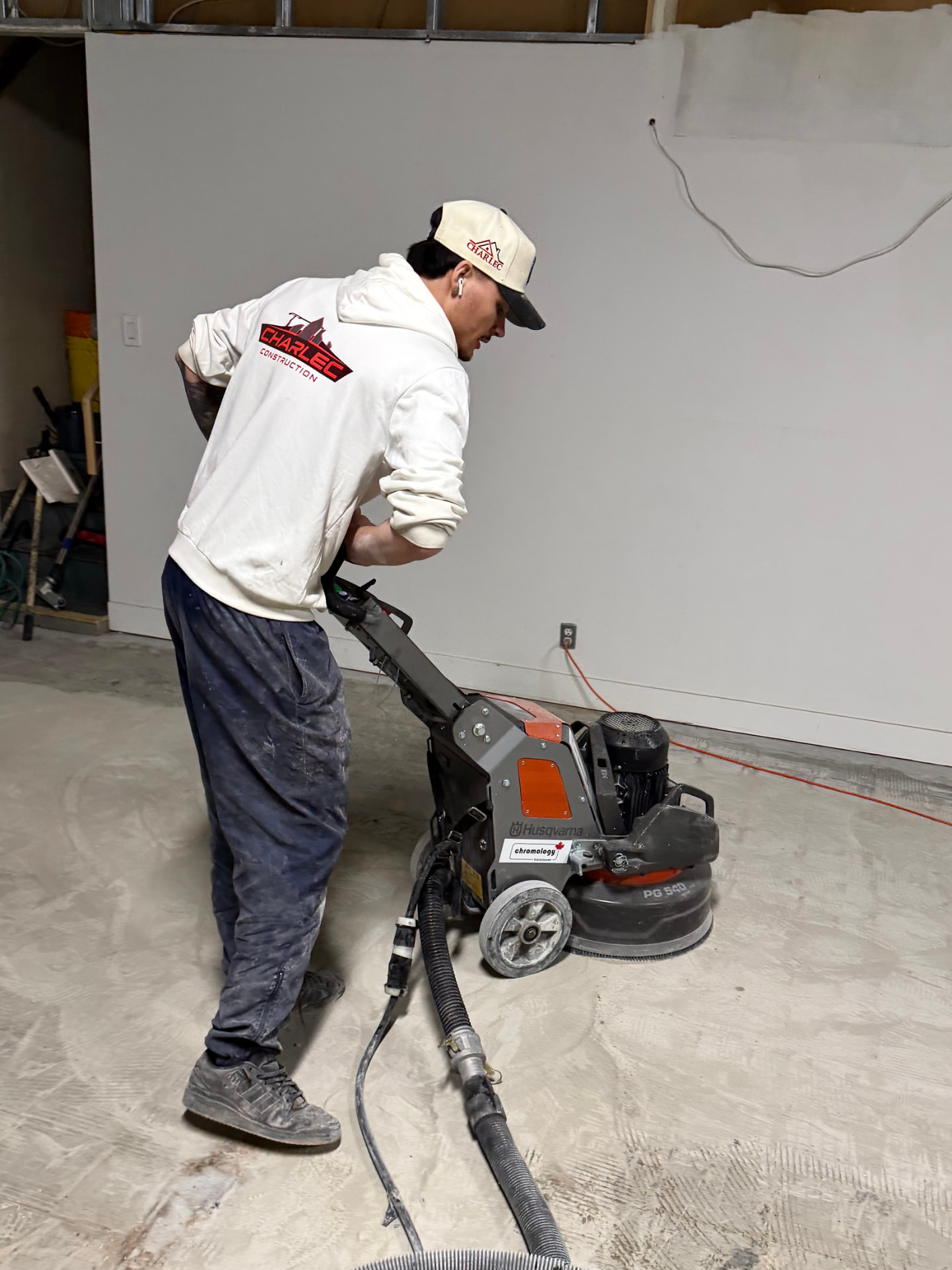
Surface Preparation & Concrete Repair
The foundation every coating system depends on.
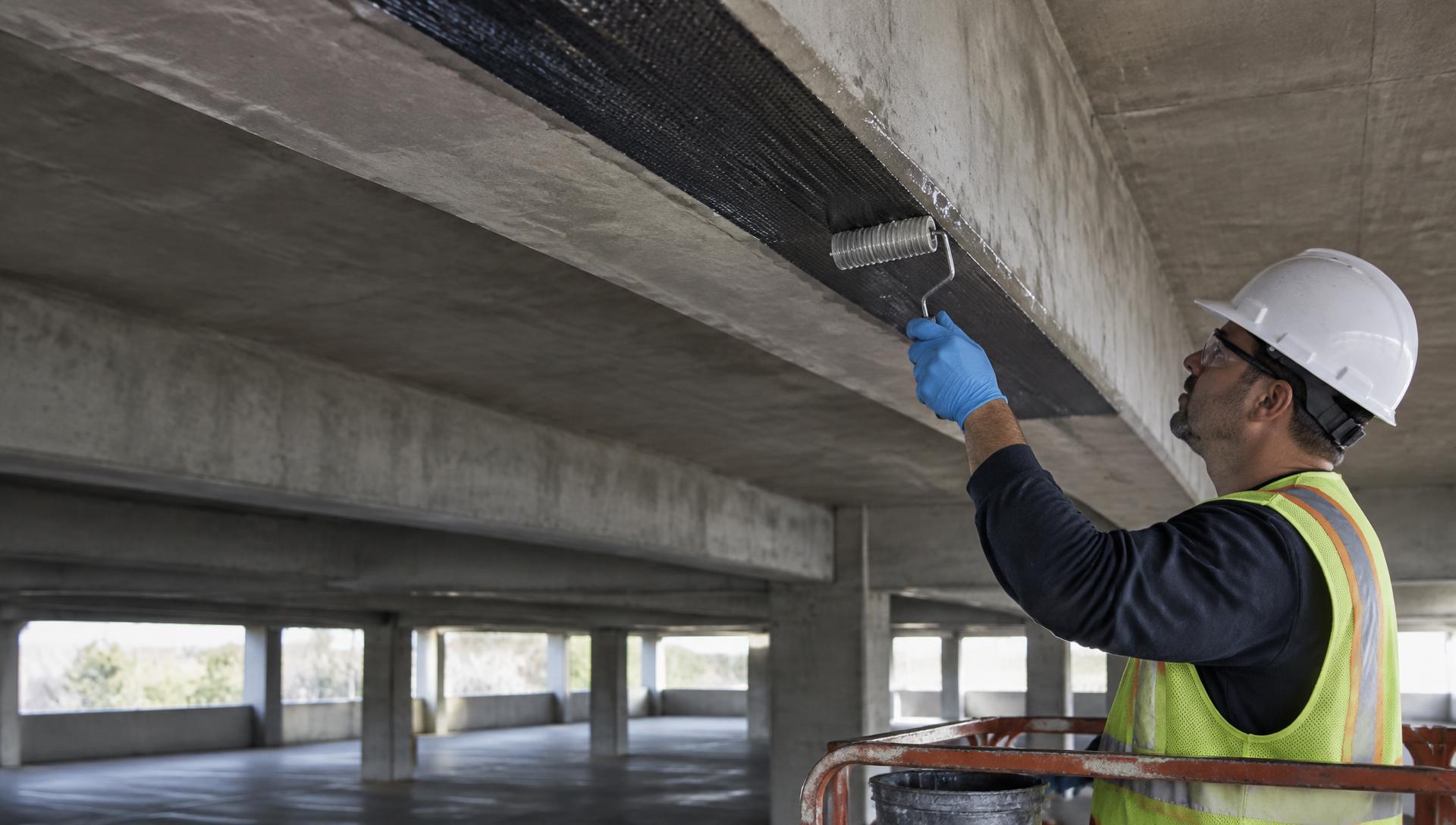
Structural Concrete Restoration & CFRP Strengthening
Carbon fibre reinforcement. Engineer-specified. Installed from a sound substrate.
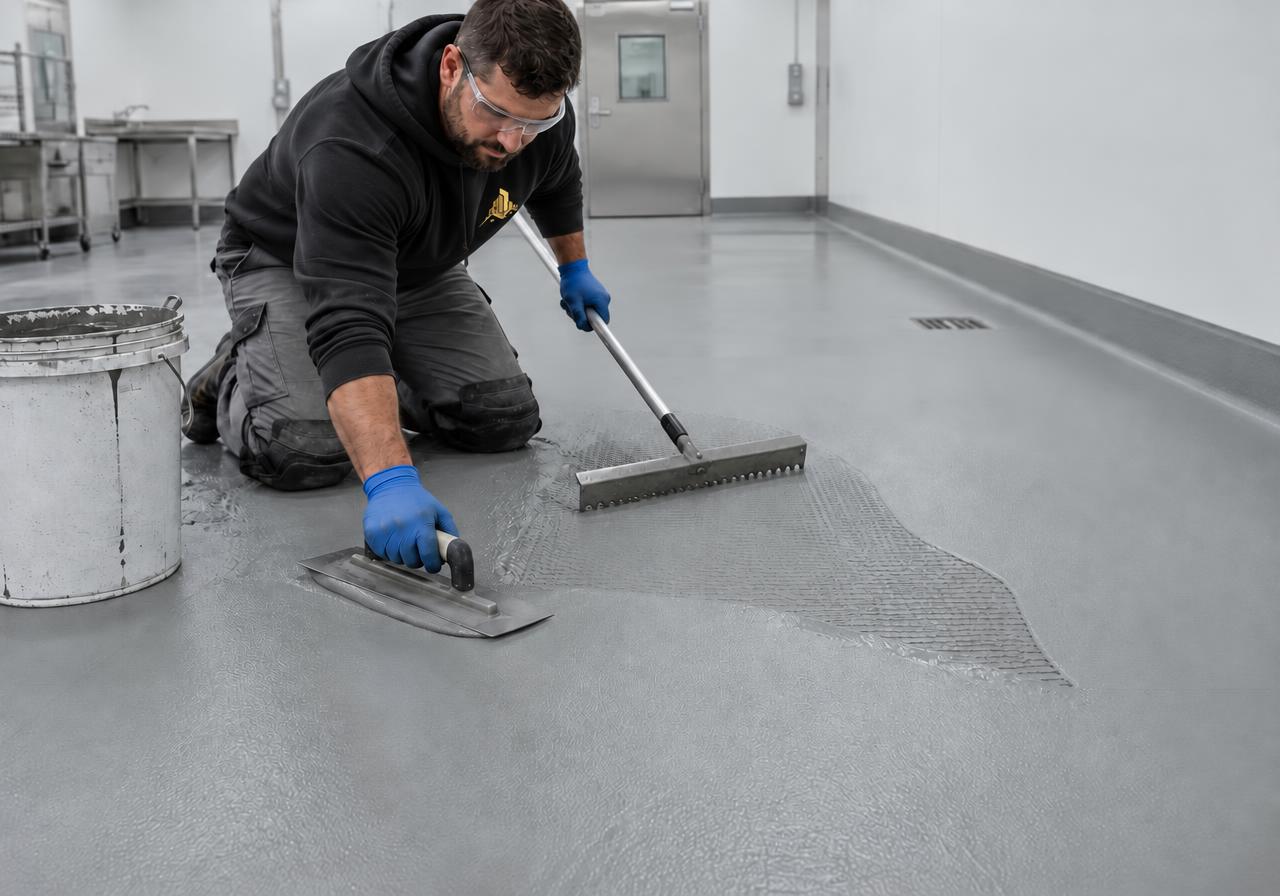
Slurry & Troweled Flooring
Heavy-duty mortar systems for kitchens, washdown, and high-impact service areas.
Start the conversation
Planning a industrial floor coatings project?
Share the location, approximate area, site conditions, and timing so we can understand your scope.