
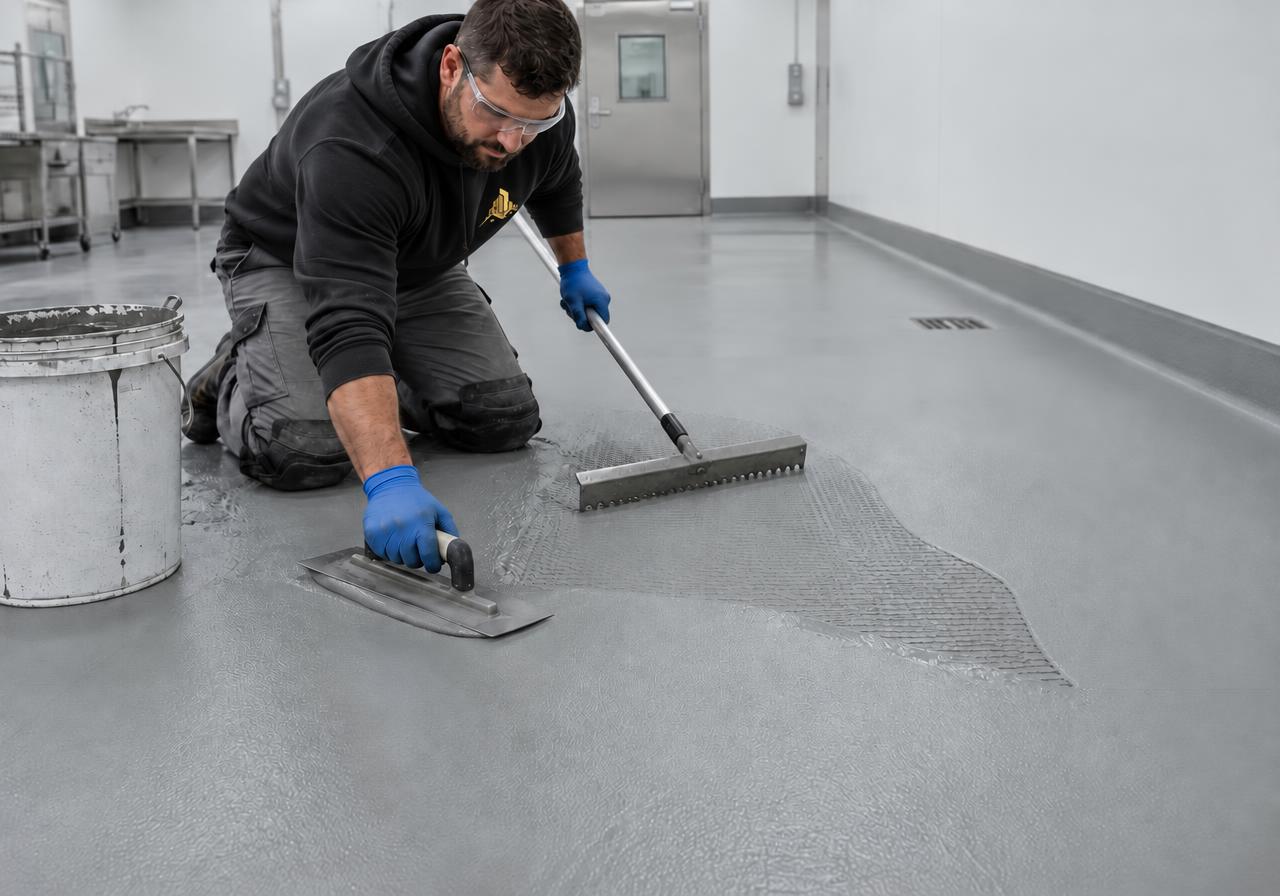
Slurry & Troweled Flooring
Heavy-duty mortar systems for kitchens, washdown, and high-impact service areas.
Overview
Where slurry & troweled flooring belongs
Commercial kitchens, food processing, and washdown environments punish floors with heat, grease, water, impact, and aggressive cleaning. Thin coatings do not belong here.
We install urethane cement, epoxy slurry broadcast, and epoxy mortar systems where the environment calls for them — with coving, drainage interfaces, and transitions detailed as carefully as the field of the floor.
Typical applications
- Commercial kitchens and servery areas
- Food and beverage processing
- Washdown and wet-process areas
- Loading and heavy-service zones
- Demanding back-of-house environments
Performance
What we weigh before recommending
- Thermal exposure — hot washdown, ovens, and freezers nearby
- Impact and point loading from equipment
- Texture and slip resistance in wet, greasy conditions
- Drainage falls and interfaces with existing drains
- Coving and wall transitions for sanitation
- Downtime available for installation and curing
System options
Urethane cement
A heavy-duty mortar system suited to thermal cycling, moisture, and aggressive cleaning — a common choice for kitchens and food processing.
Epoxy slurry broadcast
A slurry coat broadcast with aggregate for texture and durability in demanding service areas.
Epoxy mortar
A troweled mortar for rebuilding and protecting heavily worn or damaged areas where appropriate.
Installation
How the work runs
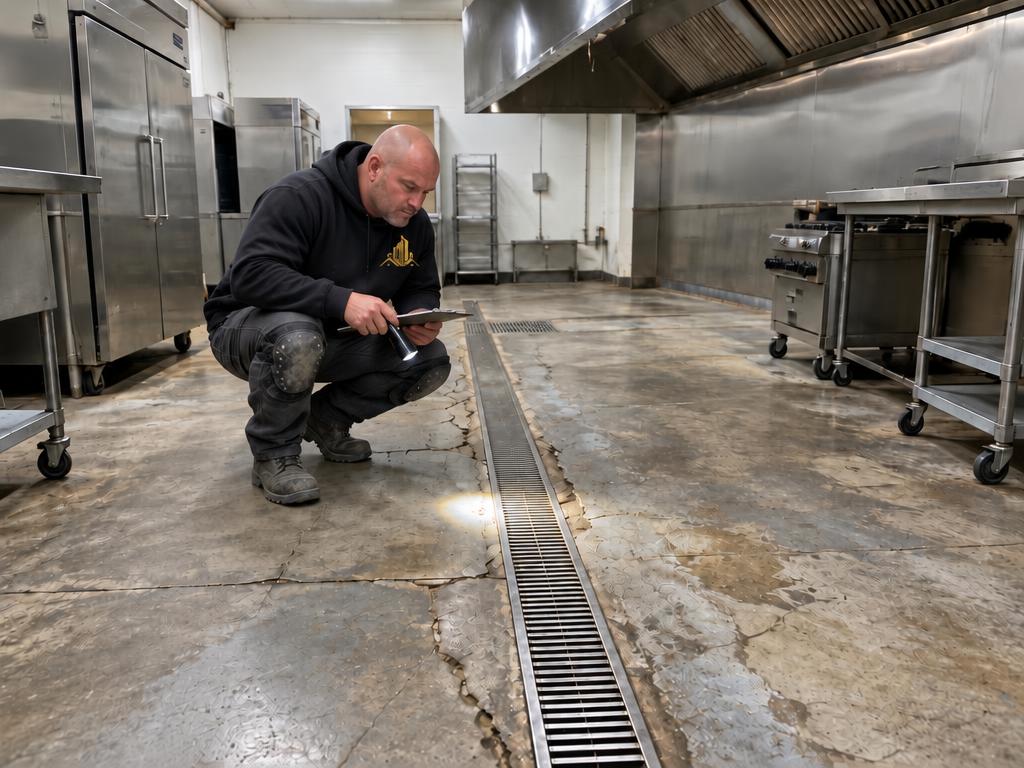
We review drainage, equipment layout, thermal exposure, and the condition of the existing slab.
Mechanical preparation opens the concrete and establishes bond; edges, drains, and terminations are detailed first.
The slurry or mortar system is placed and finished at the specified build.
Coving, drain interfaces, and transitions to adjacent finishes are completed as part of the same system.
Topcoats where specified, cure verification, and a walkthrough with your team.
Preparation & detailing
- Mechanical preparation matched to the mortar system
- Drain and penetration detailing before the field is placed
- Keying and terminations at thresholds and adjacent finishes
Maintenance & return to service
- These systems tolerate rigorous cleaning; follow the manufacturer's guidance on chemicals and temperature
- Report gouges or damage early — local repairs are far simpler than late ones
Beneath the surface
Performance.
Layer by layer.
Urethane Cement Trowel System: build-up layers from the prepared slab up. Final layers and thicknesses follow the specification.
Optional topcoat / sealer
Rolling the sealer coat.




Maintenance guide
Keep it looking new.
Urethane cement and slurry floors handle washdown, heat and heavy wear. Regular washdown keeps them hygienic.
| Task | How often |
|---|---|
| Sweep or dust mop to lift grit and debris | Daily |
| Damp mop or auto-scrub with a pH-neutral cleaner and a soft pad | Daily to weekly, by traffic |
| Clean up spills, oils and chemicals | Right away |
| Walk the floor and check high-wear zones and edges | Every 6–12 months |
| Refresh the topcoat in traffic lanes if the sheen wears | As needed |
| Hot-water washdown with a degreaser suited to urethane cement | Daily in food areas |
Do
- Use walk-off mats at entrances to keep grit off the floor
- Rinse with clean water after cleaning so no residue builds up
- Put felt or rubber pads under furniture and equipment feet
- Scrub textured surfaces with a deck brush or auto-scrubber brush
- Keep drains and coves clear so water runs off
Avoid
- Use harsh acids, citrus or vinegar cleaners — they dull the sheen
- Scrub with steel wool or aggressive black pads
- Drag sharp or heavy items across the surface
Related industries
- Commercial Kitchens
- Food & Beverage Processing
- Hospitality
- Institutional & Public Facilities
Questions
Slurry & Troweled Flooring FAQs

Start the conversation
Planning a slurry & troweled flooring project?
Share the location, approximate area, site conditions, and timing so we can understand your scope.