
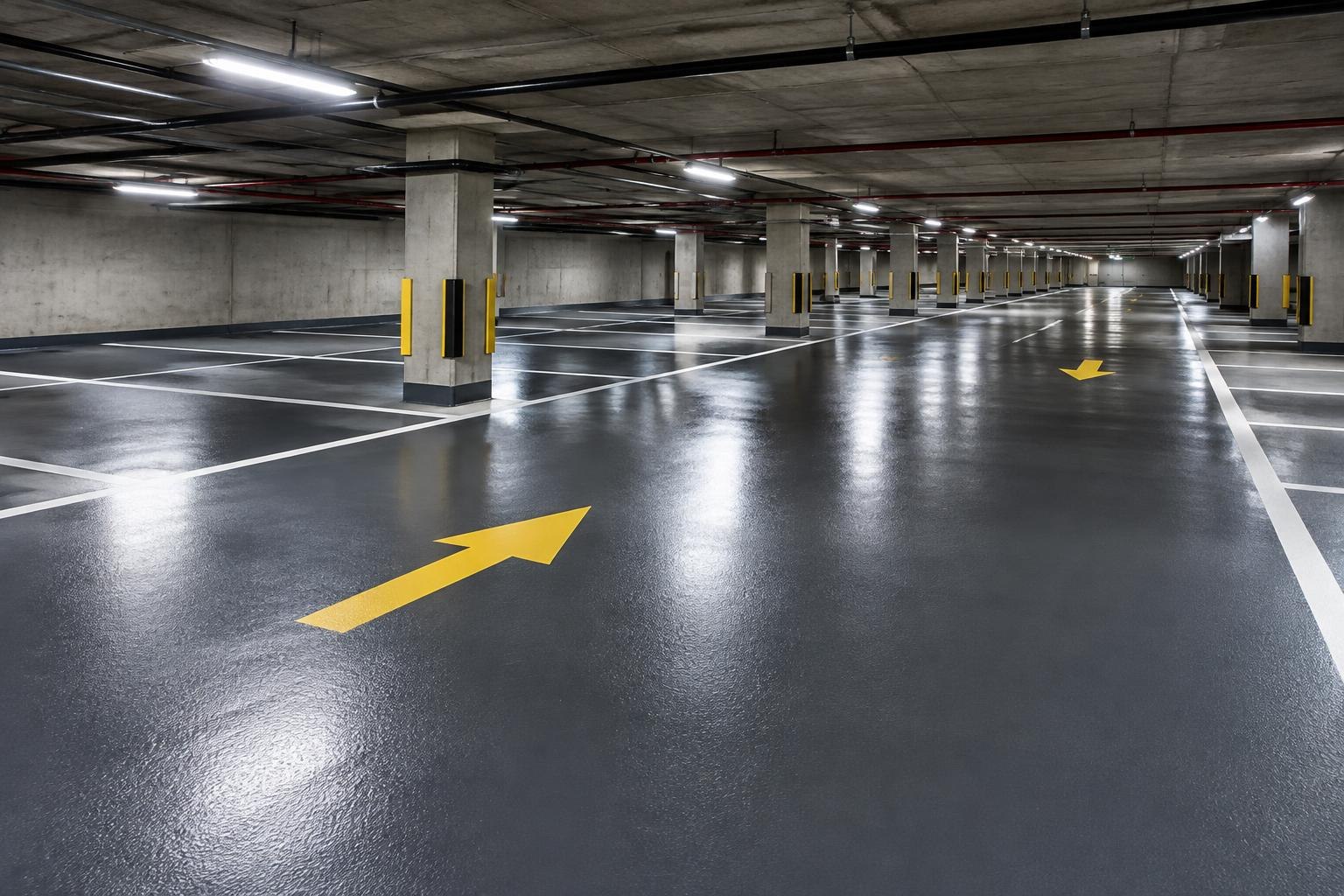
Pedestrian & Traffic Waterproofing
Membrane systems for parkades, balconies, walkways, and exposed decks.
Overview
Where pedestrian & traffic waterproofing belongs
Exposed decks live at the intersection of structure and weather. Parkades, ramps, balconies, and walkways need a membrane that stays continuous through penetrations, transitions, and movement — plus a wear surface that stands up to traffic.
We install traffic-bearing and pedestrian waterproofing systems over properly prepared and repaired concrete. Waterproofing is a system, not a colour coat: we treat substrate repairs, membrane continuity, and detailing as the substance of the work.
Typical applications
- Parking structures and drive aisles
- Ramps and turn areas
- Balconies and terraces
- Walkways and stair landings
- Suitable exterior pedestrian surfaces
Performance
What we weigh before recommending
- Substrate condition — cracks, spalls, and delamination must be addressed first
- Membrane continuity at penetrations, walls, and columns
- Transitions at doors, drains, and expansion joints
- Wear layers suited to vehicle or pedestrian traffic
- Traction in wet conditions
- Exposure — UV, de-icing salts, and freeze-thaw
System options
Traffic-bearing membrane systems
Liquid-applied membranes with aggregate and wear coats, designed for vehicular decks and ramps.
Pedestrian deck systems
Waterproofing systems for balconies, walkways, and landings, with finishes selected for foot traffic and appearance.
Installation
How the work runs
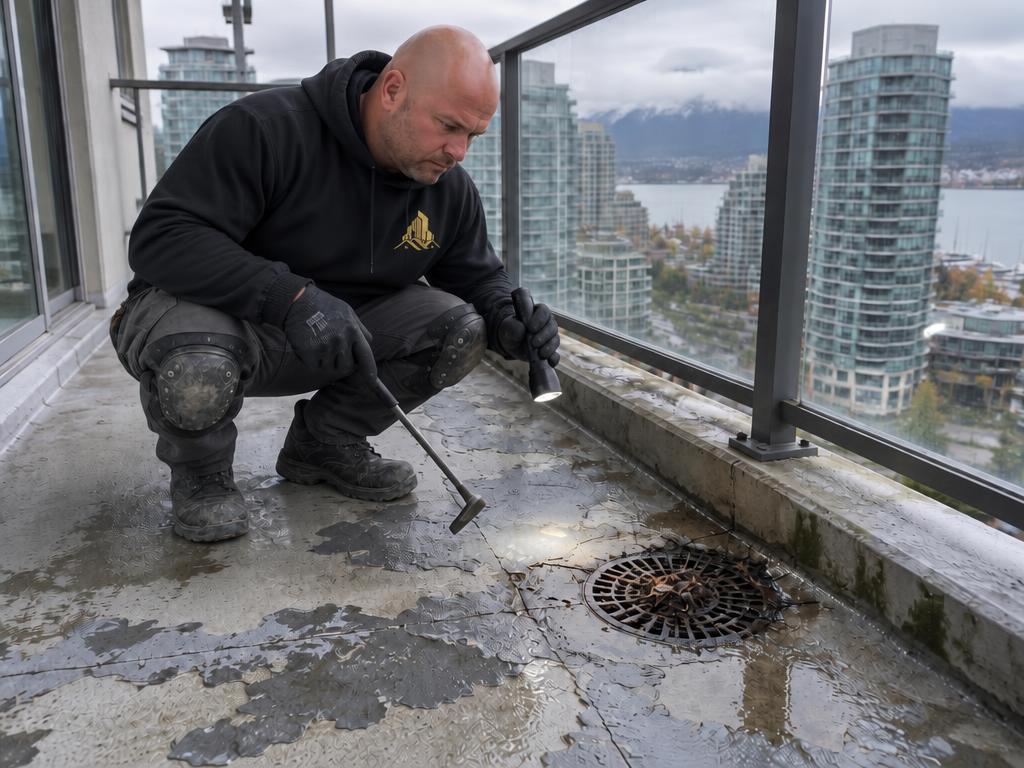
We review the deck condition, drainage, existing membrane, and movement joints.
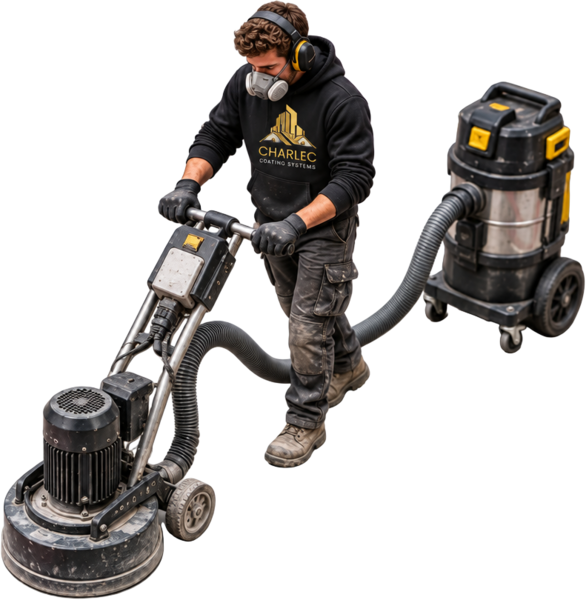
Spalls, cracks, and delaminated concrete are repaired before any membrane is applied.
Penetrations, upturns, drains, and transitions are reinforced and sealed first.
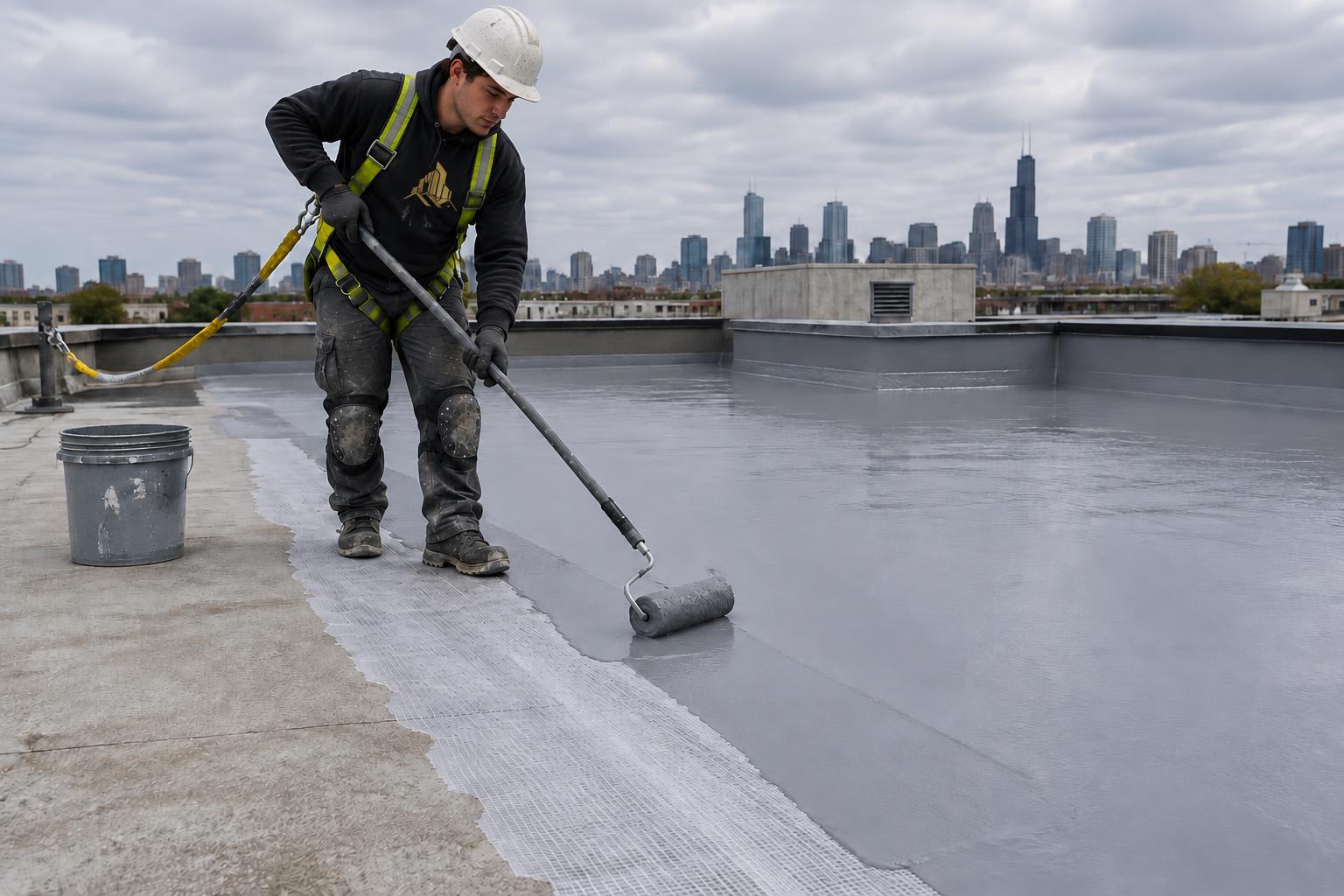
The membrane is applied at the specified build with reinforcement where required.
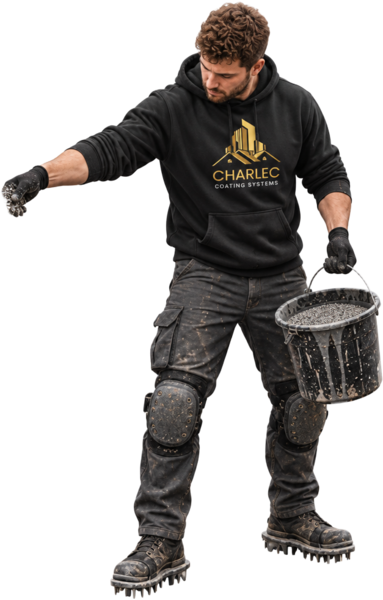
Aggregate, wear coats, and line markings complete the system before return to service.
Preparation & detailing
- Concrete repairs precede membrane work — a membrane is only as sound as the deck beneath it
- Detailing at penetrations and transitions is installed as part of the system, not as an afterthought
Maintenance & return to service
- Periodic inspection of wear coats, especially in drive lanes and turn areas
- Keep drains clear so water never ponds against the membrane
- Wear layers can be renewed without replacing the waterproofing beneath
Beneath the surface
Performance.
Layer by layer.
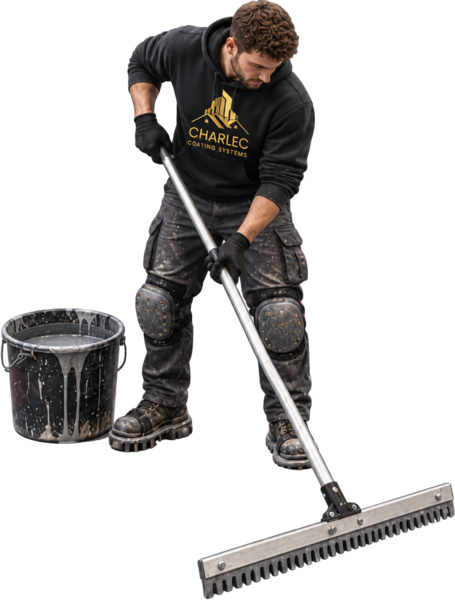
Pedestrian Waterproofing Membrane & Wear Coat: build-up layers from the prepared slab up. Final layers and thicknesses follow the specification.
Wear coat
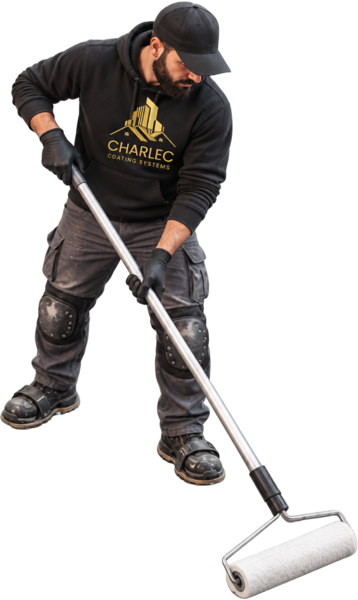
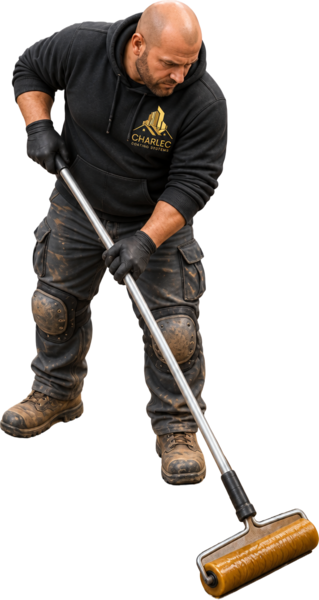
Rolling the wear coat.
Maintenance guide
Keep it looking new.
Deck and parkade membranes stay watertight when the wear coat is kept clean and intact.
| Task | How often |
|---|---|
| Sweep debris and grit | Weekly |
| Wash down with a neutral cleaner, especially after winter salt | Spring, then as needed |
| Clear drains and check sealant at joints and edges | Twice a year |
| Recoat the wear coat in turning lanes and high-traffic areas | As needed |
Do
- Use plastic snow shovels
- Rinse de-icing salt off at the end of winter
Avoid
- Use metal shovel blades or plough blades on the membrane
- Leave oil drips sitting on the deck
Related industries
- Strata & Multi-Residential
- Institutional & Public Facilities
- Hospitality
- Retail & Showrooms
Questions
Pedestrian & Traffic Waterproofing FAQs
Start the conversation
Planning a pedestrian & traffic waterproofing project?
Share the location, approximate area, site conditions, and timing so we can understand your scope.